From Qingtuan to Shuquguo: A Shared Taste and a Survival Strategy, a Thousand Kilometres Apart
“The first time I saw qingtuan (青团) in Shanghai, I was a little surprised that Jiangnan, more than a thousand kilometres from home, had something so much like the shuquguo (鼠壳粿) I grew up with. I have loved shuquguo since I was a child: the fresh, grassy scent of cudweed with glutinous or ordinary rice, and a sweet, savoury peanut filling. I could never get enough of it. Pan-fried until golden, it was the best thing I knew as a kid.
Yet in all those years I never once asked why we put cudweed into rice flour at all. Cudweed is a wild weed that people never domesticated, and from a modern point of view, mixing weeds into food is a strange thing to do. But it is not only the Teochew (Chaoshan) people who do it. Hakka communities and people across Jiangnan also mix wild greens into glutinous rice flour. There must be some common pattern or motive that led people a thousand kilometres apart to arrive at the same practice. So I asked AI to help me gather sources, and organised them into this essay.”
With that question in mind, I went looking for an answer. What I found is that this is not a coincidence. In the larger story of how the world eats, it is a survival strategy that the main narrative of wheat and rice tends to hide. When we look away from the history of empires and toward how villages actually got by, wild plants (weeds) turn out to carry quieter, heavier and more durable social functions.
In these notes I look at two spring foods I know well, Jiangnan qingtuan, a green rice ball coloured with mugwort, and Teochew shuquguo, a cudweed rice cake, from the angles of historical sociology, agricultural ecology and ethnobotany. I want to go beyond “they taste good” and place them inside a core tension: too many people on too little land, and the spring hunger gap. Seen that way, they tell a larger story about survival strategies and social resilience.
Chapter 1: Why Eat Weeds? The Forgotten Spring Hunger
Before industrial agriculture reshaped our sense of the seasons, farming societies across the Northern Hemisphere shared one harsh point in the year: the spring hunger, or “hunger gap” (春荒).
It was a tense and dangerous time. The roots stored for winter (radishes, sweet potatoes) and the cured and salted meats were almost gone, the old grain was running out, and the new crop had not yet come into ear. The Chinese phrase for it is “the green has not yet met the yellow” (青黄不接).
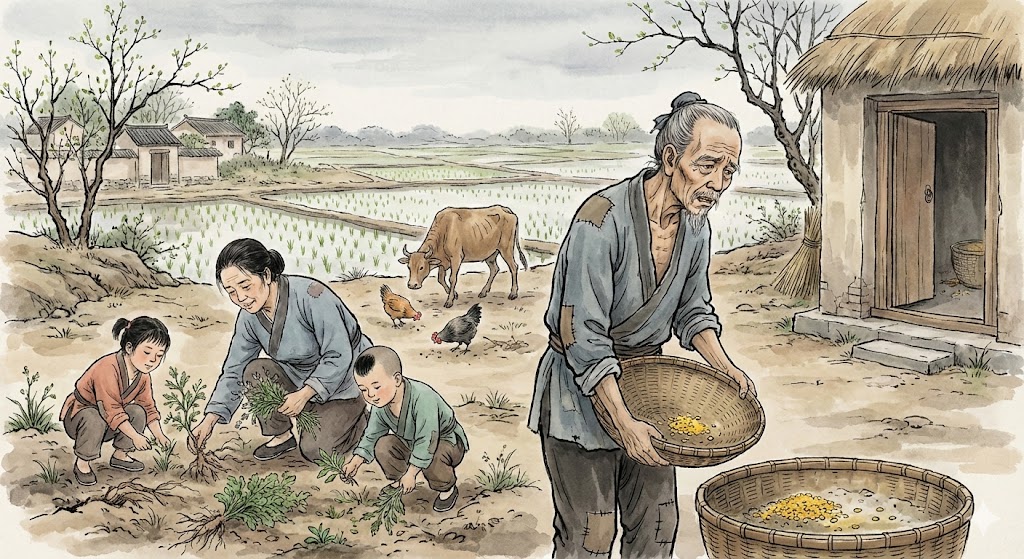
Right when calories were scarcest, nature offered a kind of compensation: young wild greens, rich in micronutrients but poor in calories, were the first things to come back. Our ancestors had to find a way to combine this limited “green” with the little “white” (starch) they had left.
The French anthropologist Claude Lévi-Strauss described bricolage: putting together a workable solution from whatever materials are at hand. Qingtuan and shuquguo are exactly that. Driven by hunger, people combined early spring greens with precious starch into mixed foods that both filled the stomach and helped the body heal. They were more than food. They were an economic buffer against spring grain shortages, and a kind of preventive medicine against seasonal illness.
This “herb + starch” pairing is, in effect, an edible history of ecological adaptation.
Chapter 2: Why These Plants? Mugwort and Cudweed
Why did Jiangnan choose mugwort, while Teochew chose cudweed? It was not chance. It came from the interaction between local environment and local knowledge.
2.1 Mugwort in Jiangnan: Fighting the Damp Cold
In Jiangnan, south of the Yangtze (Jiangsu, Zhejiang and Shanghai), the weather has warmed by the Qingming festival in early April, but late cold snaps are common and the air is heavy with damp.
- Why mugwort (Artemisia argyi): It grows along field ridges and roadsides, spreads aggressively, and is easy to gather.
- How it works: Mugwort is rich in volatile oils with broad antibacterial and antiviral activity. In early spring, when flu is common, eating qingtuan made with mugwort juice was something like taking a natural antibiotic, a small biochemical barrier for the body.
- The senses: Its strong smell is the plant’s own chemical defence, but people in Jiangnan turned it into a ritual of “cleansing the body from within”.
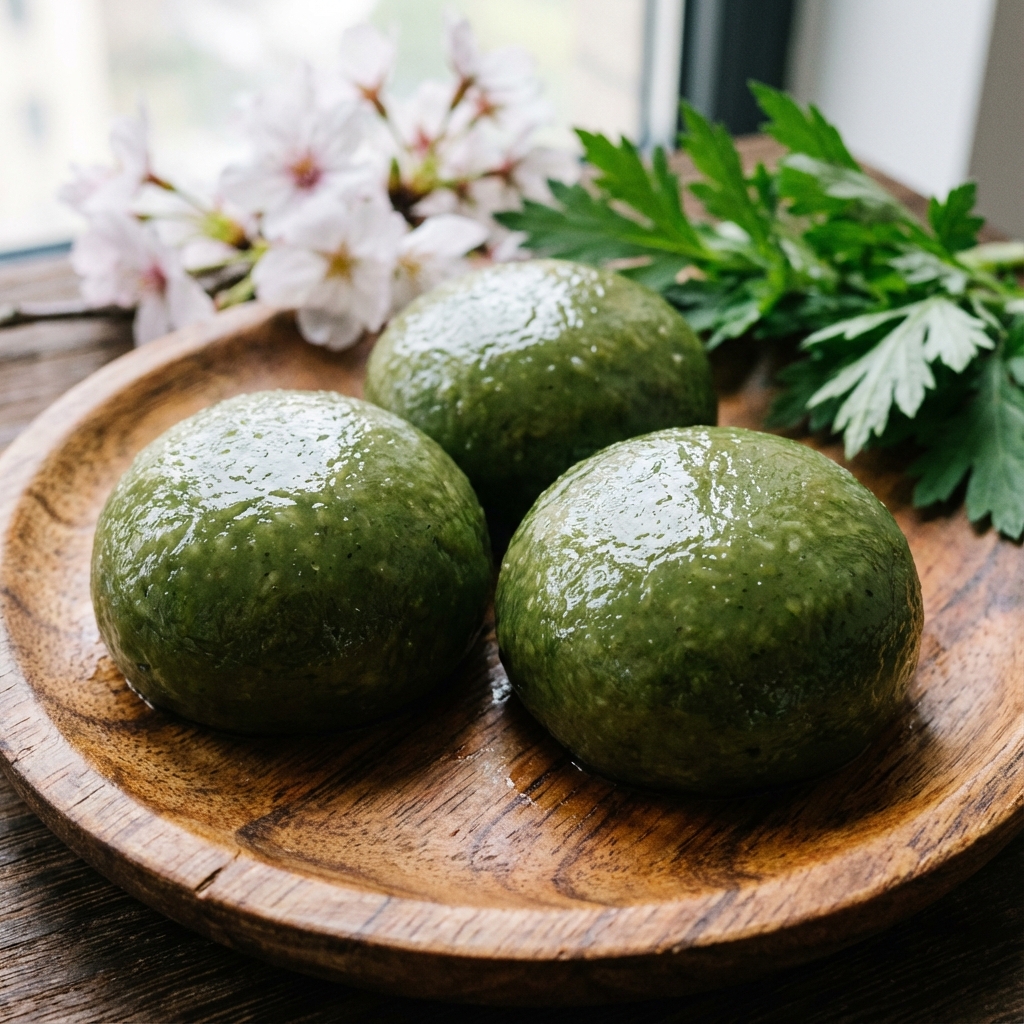
2.2 Cudweed in Teochew: Fighting the Damp Heat
Now turn to the Teochew region, where I come from. Here spring brings huinantian (回南天), the “return of the south wind”: extremely humid, muggy weather. The “warming” nature of mugwort would be too harsh here.
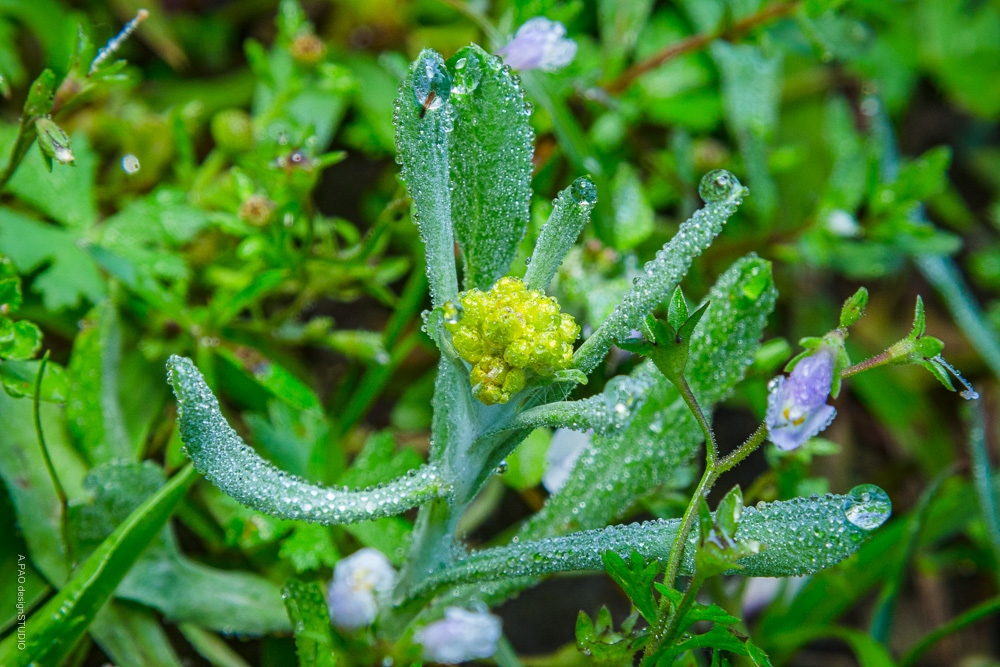
- Why cudweed (Gnaphalium affine): Locally it is called “shuke grass” (鼠壳草). It is an annual winter weed of paddy fields.
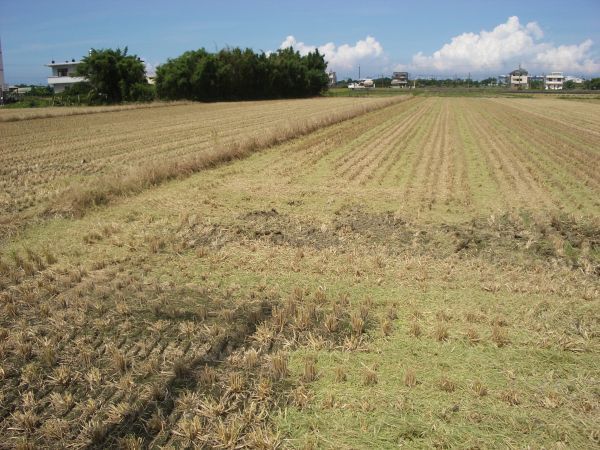
- Good timing: It grows quietly in fields left fallow between the late rice harvest and the transplanting of early rice. In the second and third lunar months, just before spring ploughing, farmers clear the weeds from their fields and collect the cudweed as food at the same time. Weeding and foraging become one job, which makes it a crop with truly zero land cost.
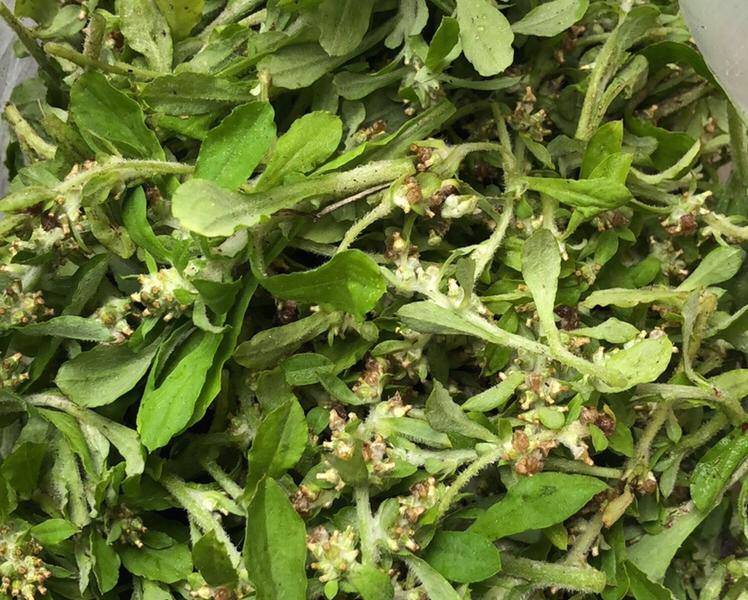
A natural pharmacy at the edge of the field: cudweed
- Pharmacology: The Teochew diet is high in purines (lots of seafood), and gout is common. Cudweed extract inhibits xanthine oxidase, which makes it a natural uric-acid-lowering intervention [1]. Its flavonoids are also anti-inflammatory and reduce swelling, easing the joint pain farmers got from working in wet paddies.
Chapter 3: How Do You Eat It? From Famine Food to Delicacy
Making a weed taste good is not easy. Behind it lies China’s long tradition of famine relief knowledge.
The Ming-dynasty Jiuhuang Bencao (救荒本草, Herbal for Famine Relief) [3] by Zhu Su already listed cudweed among officially recognised substitute foods. But the way Teochew people use it shows a particular survival logic often called involution: pouring almost unlimited labour into limited resources to create value.
3.1 Kueh: A Trick That Makes Grain Go Further
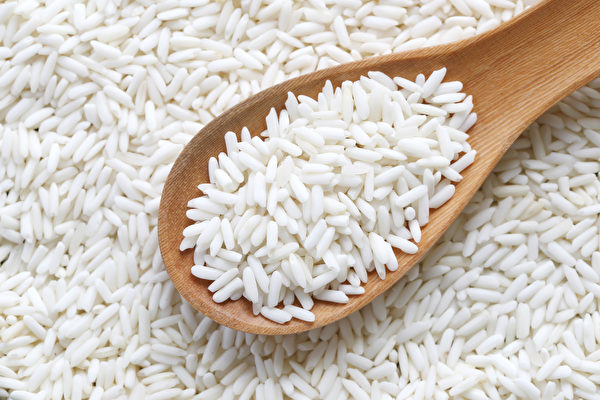
The base for stretching grain: glutinous rice
In Teochew, kueh (粿, rice-flour cakes) is not just food. It is a technique for managing calories. A bowl of rice stops filling you up quickly. But if you grind the rice into flour, add water, cudweed paste and sweet potato starch, then knead, ferment and steam it, both the volume and the feeling of fullness go up a great deal. Here cudweed acts as a filler and a binder, letting the dough hold its shape even after a lot of coarse grain (such as sweet potato flour) has been added. In years of scarcity, this really did mean “grass in place of grain”.
3.2 A Lot of Work
Making this childhood treat is in fact very labour-intensive:
- Gathering: Pull the plants up by the roots just before Qingming.
- Boiling: Wash off the mud and boil with alkali to remove the bitterness.
- Pounding: This is the key step. The thump, thump, thump of the pestle is the soundtrack of Teochew villages before Qingming. The plant fibres break apart into a dark green mass called “shuke floss” (鼠壳棉).
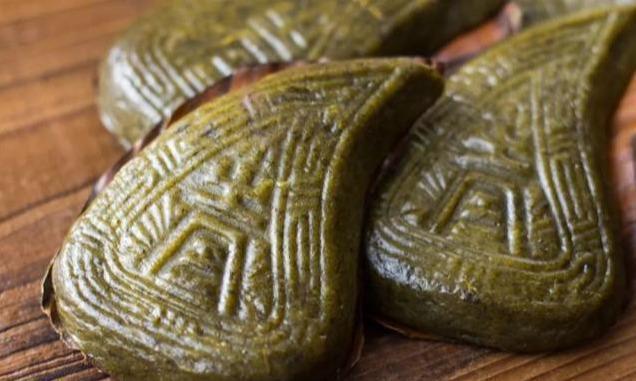
- Moulding: Knead it into the rice flour and press it in a carved wooden mould into a peach shape, the same form as the red peach kueh (红桃粿).
- Steaming: In the rising steam, the kueh turns a deep, glossy dark green.
Video: how shuquguo is made (click to play)
Chapter 4: A Deep Memory: When Food Became a Lifeline
If famine relief was routine in imperial times, the “Three Years of Difficulty” (1959–1961) [2] in the mid-20th century was an extreme stress test. It carved cudweed permanently into Teochew collective memory.
At that time, the Teochew plain’s old problem of “many people, little land” [5] became acute. Cudweed grows fast and regrows well, so it became a life-saving source of green food. Shuquguo changed in those years. It was no longer a tasty glutinous rice cake but mostly cudweed with a little rice water, bran or sweet potato leaf flour. In famine years, when people’s immunity was low, cudweed’s antibacterial, anti-inflammatory and cough-relieving properties may have given failing bodies a thin line of defence. This is why many older people call it the “life-saving grass”.
After the disaster, cudweed was not abandoned. Instead it went through a kind of sublimation of trauma. By eating an improved, tasty shuquguo at festivals, we remember that period and teach the younger generation to value food. That particular herbal scent remains tied to a deep, quiet relief at having survived.
Chapter 5: Same Roots, Different Paths: Qingtuan and Shuquguo Today
The two share an origin in the Cold Food (寒食) custom of eating cold dishes, but they have gone different ways.
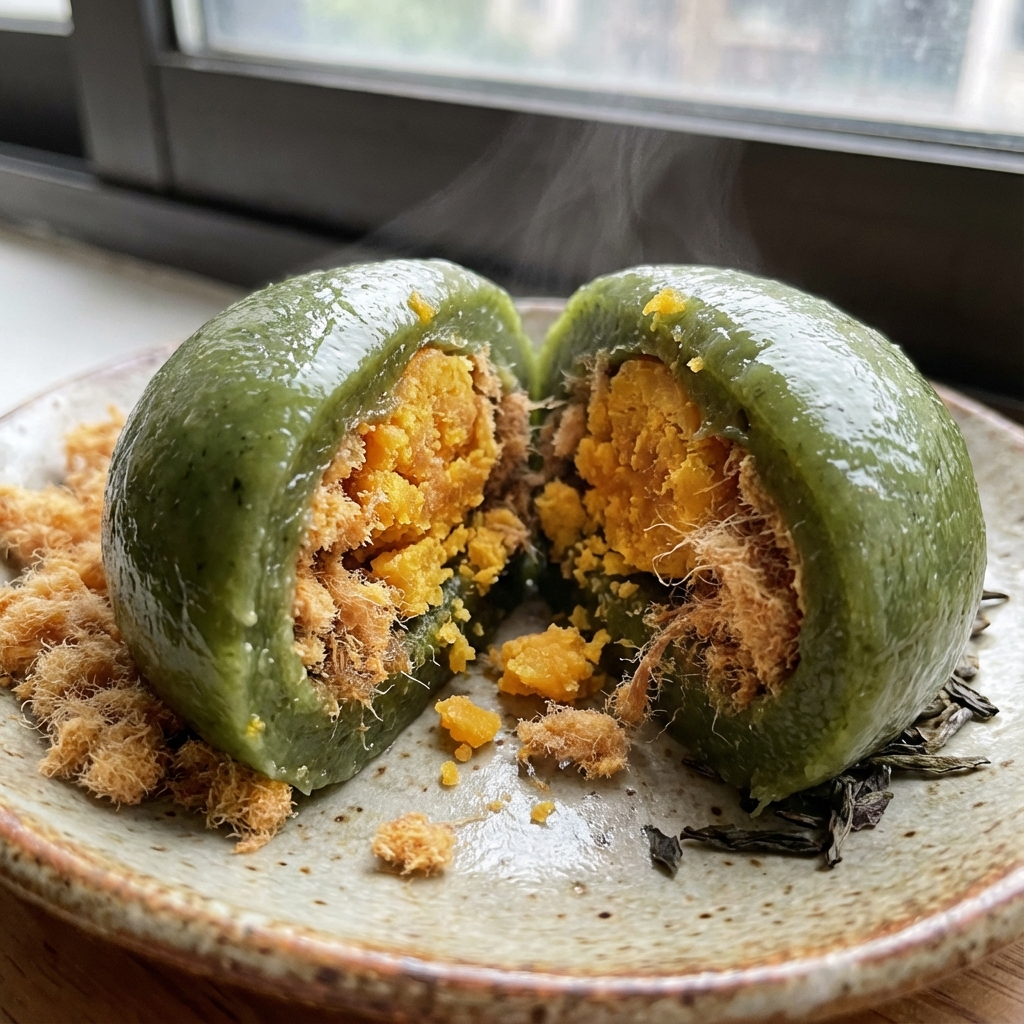
Jiangnan qingtuan, shaped by the tastes of the literati, gradually moved from ritual offering to an elegant way of “tasting spring”. Today, under commercial pressure, many qingtuan have dropped mugwort for wheatgrass (浆麦草) to get a brighter green and a softer bite, and fillings have become trendy snack-style combinations like salted egg yolk with pork floss [4]. Qingtuan has drifted away from its serious setting in Qingming ancestor worship.
Teochew shuquguo, by contrast, has kept its tradition firmly within lineage society. It is a medium between people and the gods. When families worship the local deities and their ancestors, shuquguo stamped with auspicious patterns must be on the altar. For Teochew people overseas (the diaspora) [6], a few catties of dried shuke floss are a link to the identity of home.
Chapter 6: We Are Not Alone: The Same Idea Around the World
When I looked further afield, I was surprised to find that eating weeds is not unique to us. Farming cultures around the world, facing similar pressures, made strikingly similar choices.
- England: West Yorkshire has dock pudding [7]. People mix the young shoots of bistort and stinging nettle with oatmeal and fry it. It was once a poor family’s “blood cleanser” for getting through the spring hunger, and today there is even a World Dock Pudding Championship.
- Italy: In the philosophy of cucina povera (“poor kitchen”) [8], peasants gathered wild greens and cooked them into soups with stale bread, or made nettle dumplings. The logic is exactly the same: use leftover starch to carry wild nutrition.
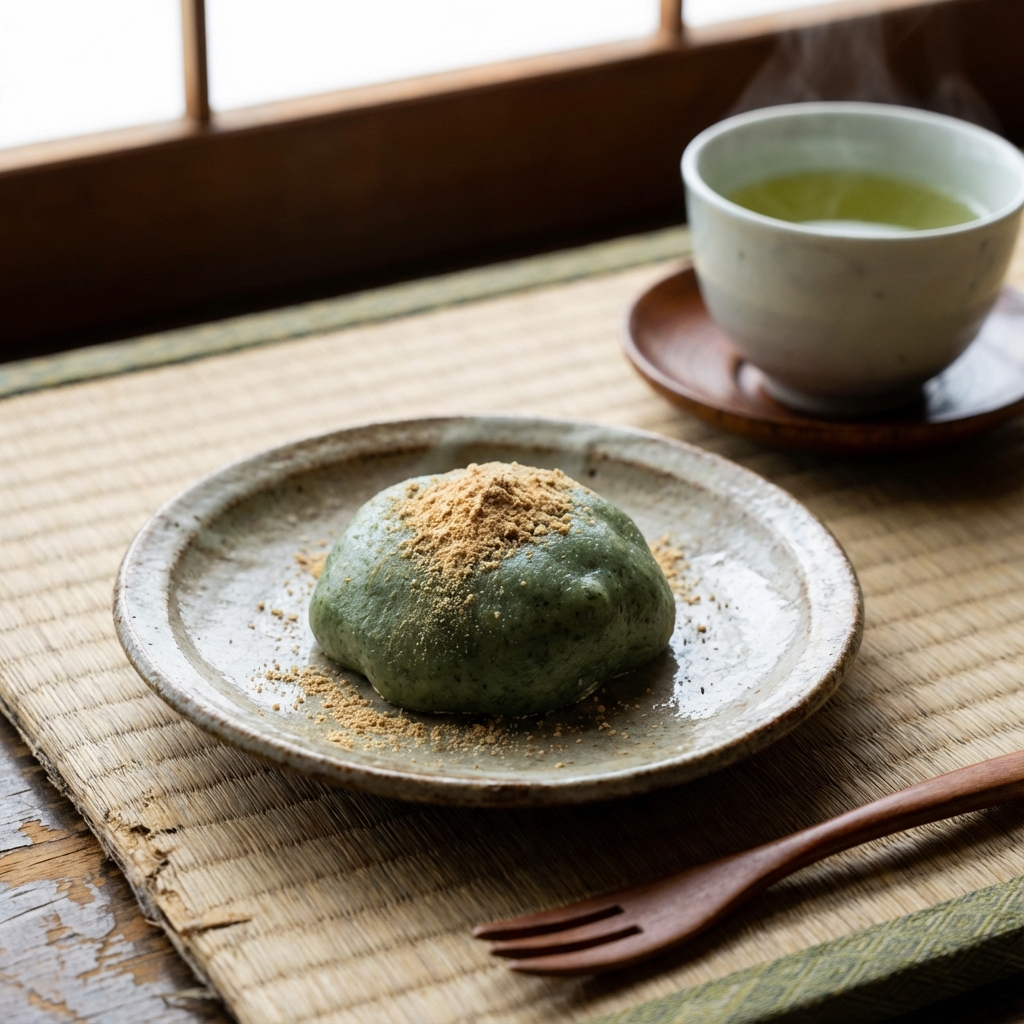
- Japan: Kusa mochi (草餅, “grass rice cake”) was originally made with cudweed too, called hahakogusa (母子草, “mother-and-child grass”). But pounding “mother-and-child grass” sounded like “beating a mother and her child”, which was considered unlucky, so people switched to mugwort. Teochew people, far from finding it unlucky, take it as a symbol of many children and good fortune.
Conclusion: The Taste of Resilience
Cudweed did not reach the Teochew table by chance. It is a long story of people under severe resource limits who, through watching their environment, testing on their own bodies and applying technique, found ways to survive as well as they could.
It used the gap in time between rice crops to answer hunger in time; it used waste land and field ridges to answer the shortage of space; it used its medicinal activity to resist the damp, hot climate; and through the form of kueh, it made precious grain go further.
This humble field weed witnessed how our ancestors contended with a harsh natural world. So when I am far from home and think of a soft, fragrant shuquguo, what I miss is not only the tastes of childhood, but a whole inherited memory of survival, endurance and good sense.
Main References
- Gnaphalium affine D. Don, a medicinal and edible plant… (PubMed)
- The Great Chinese Famine: 15-55 million deaths
- Mapping the Knowledge of Famine Foods in Late Imperial China (CityU)
- Qingtuan, a traditional Chinese holiday food, gets a modern makeover
- Chaoshan Food Culture in Pontianak / “Many people, little land”
- The Spread of Chaoshan Food Culture in Pontianak (ResearchGate)
- A history of dock pudding: A centuries-old springtime delicacy from Yorkshire
- Gennaro’s Guide to Cucina Povera | From Citalia